

What Is NeuroRelational Coaching™?
A Christ-centered coaching framework for emotional maturity, relational health, and lasting growth.
NeuroRelational Coaching™ is the framework behind all coaching and leadership development at Balanced Coaching. It brings together what neuroscience tells us about how people change, what relationships require for trust and growth, and what spiritual formation looks like over time. The goal is not quick fixes, but deep, sustainable growth that shapes how you live, relate, and lead.
Whether you are pursuing personal growth or leading others, the same principles of emotional regulation, relational connection, and spiritual grounding shape lasting transformation.
Why a NeuroRelational Approach to Growth?
Most people don’t struggle to grow because they lack information or motivation. They struggle because growth requires more than knowing what’s right — it requires the emotional and relational capacity to live it out, especially under stress.
When stress rises, the nervous system takes over. Old patterns surface. Relational defenses activate. Even strong faith and good intentions can feel difficult to access in the moment.
That’s why NeuroRelational Coaching™ focuses not just on beliefs and behaviors, but on emotional regulation, relational safety, and the way the brain learns new responses over time. When people feel grounded, supported, and understood, change becomes possible — and sustainable.
Spiritual growth, emotional maturity, and relational health are not separate journeys. They are deeply connected parts of the same formation process.
What Makes NeuroRelational Coaching™ Different
Many growth approaches focus on one primary area — thinking, behavior, or spiritual practice. Each of those is important, but none is sufficient on its own.
NeuroRelational Coaching™ integrates three essential dimensions of transformation:
Emotional: learning to regulate stress, recognize internal patterns, and respond with greater steadiness
Relational: developing healthier ways of connecting, communicating, and repairing relationships
Spiritual: growing in identity, trust, and lived connection with God
This work is not about fixing what is broken, but strengthening what is forming. It creates space to slow down, reflect, and grow with intention rather than striving for change through pressure or performance.
The Foundations of NeuroRelational Growth
All coaching and leadership development at Balanced Coaching is grounded in a set of core growth principles that support how people change over time. These foundations shape not only what we focus on in coaching, but how coaching conversations are structured and how growth is supported in real life.
They form the base of the NeuroRelational Coaching™ Framework and support everything that happens above them:
Connection Comes First
People grow best in relationships where they feel safe, seen, and supported.
Regulation Supports Maturity
Emotional steadiness allows wisdom, faith, and relational skills to remain accessible under pressure.
Attunement Builds Trust
Growth deepens when people experience empathy, resonance, and relational presence.
Integration Creates Change
Lasting growth integrates emotional experience, reflection, and practical application.
Identity Shapes Behavior
Change grows from knowing who you are and whose you are, not from trying harder.
Growth Is a Process, Not an Event
Transformation unfolds over time through repeated, relationally supported experiences.
To support this kind of growth, NeuroRelational Coaching™ is designed as an integrated framework that connects these foundations with intentional coaching movements and applied coaching practices.
Here’s how the pieces fit together:
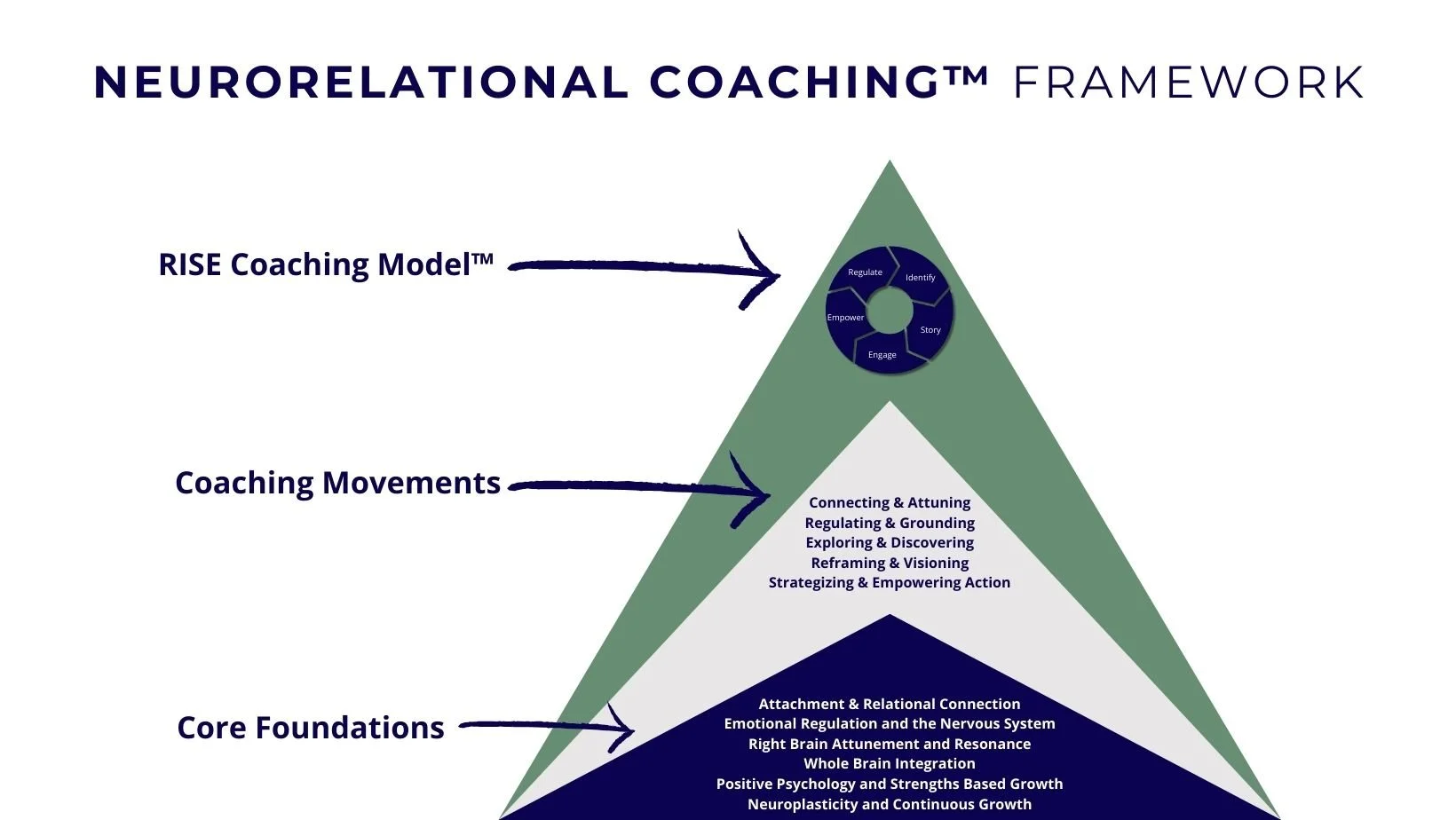
How Growth Happens in NeuroRelational Coaching™
Growth doesn’t usually happen in straight lines. It happens in cycles of awareness, reflection, practice, and renewed confidence. NeuroRelational Coaching™ follows a relational rhythm that supports both emotional safety and meaningful forward movement, helping people grow without feeling rushed or pressured.
Rather than pushing for quick solutions, coaching conversations move through five core growth movements that repeat and deepen over time.
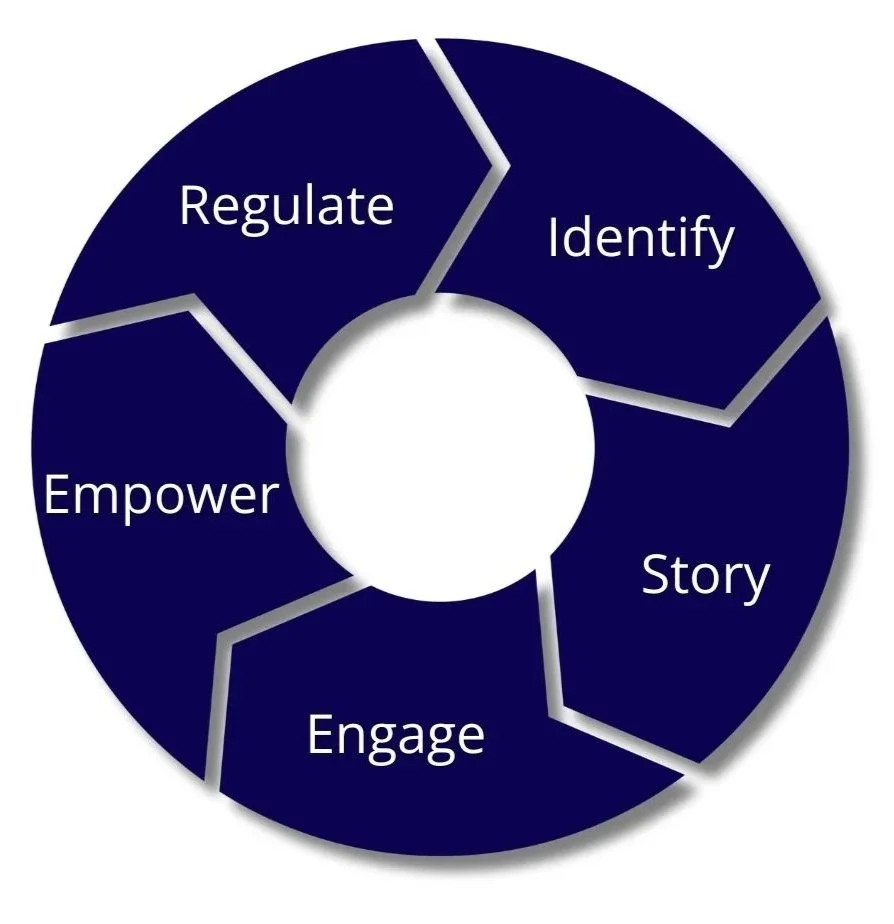
The Five Coaching Movements
1. Regulate — Creating Emotional Steadiness
Before growth can happen, the nervous system needs to feel safe and grounded. This movement focuses on helping people slow down, notice stress responses, and return to a place where reflection and connection are possible.
When people feel regulated, they can think more clearly, listen more openly, and engage challenges with greater calm and curiosity.
2. Identify — Gaining Clarity and Awareness
Here the focus shifts to understanding patterns, beliefs, motivations, and relational dynamics that shape daily responses. This might include exploring habits, leadership styles, emotional triggers, or spiritual questions.
Clarity creates choice. When people can name what’s happening beneath the surface, they are no longer controlled by it.
3. Story — Making Meaning of Experience
Our past experiences and personal narratives shape how we interpret the present. This movement invites reflection on how earlier relationships, seasons of life, and spiritual experiences influence current expectations and reactions.
Understanding one’s story brings compassion, insight, and often relief — helping people respond from the present rather than relive the past.
4. Engage — Practicing New Ways of Responding
Growth requires more than insight. It requires trying new behaviors, communication patterns, and leadership practices in real life. This movement focuses on applying what is being learned in practical, relational ways.
Small experiments build confidence and momentum, allowing change to feel achievable rather than overwhelming.
5. Empower — Strengthening Ownership and Direction
As new patterns take root, people grow in confidence, clarity, and self-leadership. This movement focuses on strengthening identity, reinforcing growth, and clarifying next steps that align with personal values and calling.
Empowerment isn’t about pressure — it’s about helping people trust themselves and the growth they are experiencing.
These movements are not linear steps to complete, but ongoing rhythms that support long-term formation. People may move through them multiple times in a single season, deepening insight, strengthening resilience, and growing in relational and spiritual maturity over time.
One Framework, Applied to Different Seasons and Roles
While the context of growth may differ, the process of transformation remains the same. Whether someone is navigating personal questions of identity and direction or leading others through complex challenges, emotional maturity, relational health, and spiritual grounding remain essential.
NeuroRelational Coaching™ applies the same growth principles across both personal and leadership development, adapting the focus to the realities of each person or organization.
For Personal Growth and Discipleship
In personal coaching, NeuroRelational Coaching™ supports individuals who want to grow with greater self-awareness, emotional resilience, and spiritual depth. This work often helps people:
understand emotional and relational patterns
reduce anxiety and stress responses
strengthen relationships and communication
deepen spiritual connection and trust in God
clarify purpose and life direction
Rather than striving for change, individuals learn how to grow with intention, compassion, and steady support.
For Leaders and Teams
In leadership and organizational settings, the same framework strengthens both individual leaders and team culture. NeuroRelational Coaching™ supports leaders and teams in:
building relational trust and emotional safety
improving communication and conflict navigation
increasing self-awareness and leadership presence
sustaining healthy culture under pressure
aligning values, mission, and daily practice
When leaders grow in emotional and relational maturity, their teams benefit as well — creating environments where people can thrive rather than simply perform.
Growth does not require becoming someone different — it requires becoming more grounded, more connected, and more aligned with who God is shaping you to be. NeuroRelational Coaching™ provides a framework for that kind of formation, whether the focus is personal transformation or leadership development.
NeuroRelational Coaching™ at Balanced Coaching
At Balanced Coaching, NeuroRelational Coaching™ shapes how personal coaching, leadership development, and team training are designed and delivered. Every engagement is grounded in the same growth principles and coaching movements, adapted to your unique goals, challenges, and context.
This means whether you are working on personal formation, leadership development, or organizational culture, the focus remains on growing with emotional maturity, relational depth, and spiritual grounding — not quick fixes or surface-level change.
Coaching is always collaborative, relational, and tailored to your season of life or leadership.
Choose the Pathway That Fits Your Current Season
People arrive at growth conversations for many different reasons. Some are navigating personal questions of purpose, stress, or spiritual direction. Others are carrying the responsibility of leading teams, organizations, or ministries and want to lead with greater steadiness and clarity.
Wherever you are starting, NeuroRelational Coaching™ provides a framework for meaningful, sustainable growth.
Choose the pathway that best fits your current season:
If you’re unsure which path is the best fit, I’m happy to help you think it through. Just send me an email and let’s talk.